Best VPNs for Travelers and Frequent Flyers
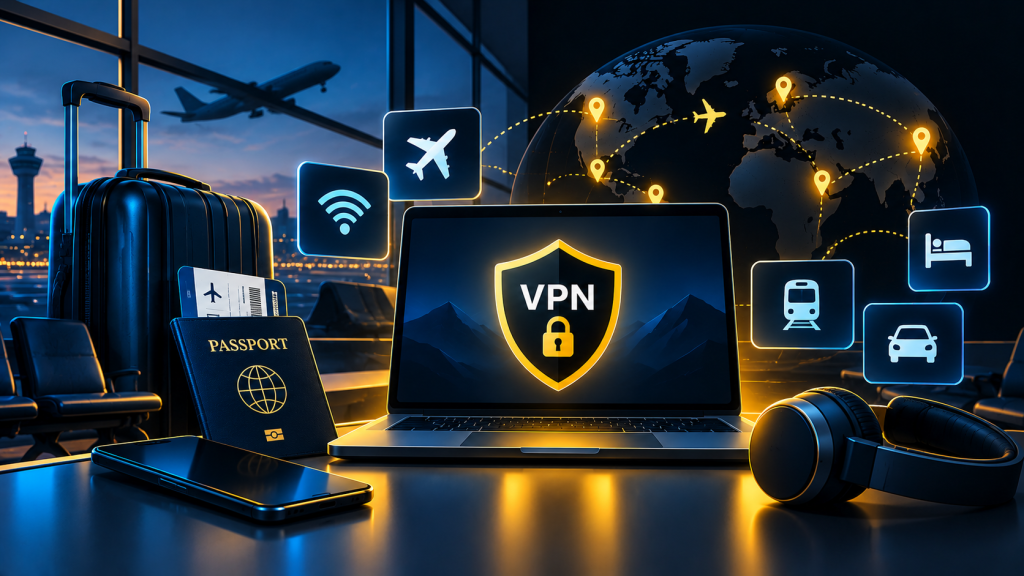
You arrive at an airport, connect to public Wi-Fi and need to check your email before boarding. Later, your hotel connection works, but a familiar streaming service shows different content. Choosing one of the best VPNs for travelers can help you manage privacy, access familiar services and maintain a reliable connection while moving between countries.
Why Travelers Should Consider a VPN
Travel often involves unfamiliar networks in airports, hotels and cafés. A VPN encrypts traffic between your device and a VPN server, reducing what local network operators can observe.
However, HTTPS already encrypts most modern website connections. A VPN adds another privacy layer but does not prevent phishing, malware or account tracking.
VPNs can also change your apparent IP location. This may help with accessing certain services abroad, although streaming platforms and financial websites can restrict VPN connections.
Best VPNs for Travelers in 2026
Different VPN providers suit different travel habits, devices and privacy preferences.
NordVPN
NordVPN is worth considering if you want a broad selection of server locations and support for multiple devices.
Its NordLynx protocol is based on WireGuard technology and is designed for efficient connections.
Travelers should compare available server locations with their destinations before subscribing.
ExpressVPN
ExpressVPN offers applications for major operating systems and uses its Lightway protocol.
Its straightforward interface may appeal to frequent flyers who prefer simple connection controls.
Check supported devices and subscription conditions to determine whether the service fits your travel routine.
Surfshark
Surfshark supports unlimited simultaneous device connections under its standard VPN offering, making it relevant for travelers carrying several devices.
It also offers modern VPN protocols and server locations across multiple regions.
Compare its available features and renewal terms with competing services.
Proton VPN and Mullvad
Proton VPN emphasizes privacy and offers both free and paid service options. Its free plan may suit occasional users, although server selection and features differ by plan.
Mullvad focuses on minimizing personal information during registration and offers a relatively straightforward subscription approach.
Both deserve consideration if privacy policies matter more to you than entertainment features.
What Features Matter Most While Traveling?
A reliable travel VPN should work across changing networks without requiring constant adjustments.
Look for these practical features:
- Kill switch: Helps prevent traffic from using an unprotected connection after a VPN interruption.
- Modern protocols: WireGuard and other efficient protocols can support responsive connections.
- Server locations: Nearby servers may reduce latency during travel.
- Mobile compatibility: Check support for your phone, tablet and laptop.
- Clear privacy policy: Review logging practices and independent audit information.
Some VPNs also offer obfuscation, which attempts to make VPN traffic harder to identify. Availability and effectiveness vary by provider and network.
Using a VPN for Streaming and Remote Work
Travelers often want access to familiar streaming subscriptions while abroad.
A VPN may change your apparent location, but it cannot guarantee access to Netflix, Hulu or other regionally restricted services. Licensing rules and VPN detection can affect availability.
For remote work, check whether your employer requires a corporate VPN. Personal VPN applications may conflict with company security policies or internal network access.
If you frequently join video meetings, prioritize stable connections and nearby servers rather than selecting distant locations unnecessarily.
Free vs Paid VPN for International Travel
Free VPNs can be useful for occasional browsing, particularly when offered by established providers with transparent privacy policies.
However, free plans may restrict server selection, connection speeds or available features.
Paid subscriptions generally provide broader choices, but higher prices do not automatically mean better privacy or performance.
Before purchasing, check device limits, cancellation conditions and subscription renewal pricing.
Also verify local regulations. VPN use and access to certain services may be restricted in some destinations.
Which VPN Should You Choose?
The best VPNs for travelers depend on where you travel and how you use the internet.
NordVPN and ExpressVPN are reasonable options to compare for everyday travel convenience. Surfshark may suit people using many devices, while Proton VPN and Mullvad offer alternatives for privacy-focused users.
Install your VPN before departure, test its connection and save important account recovery information.
A dependable VPN should fit naturally into your travel routine without adding unnecessary complications.
FAQ
Should you use a VPN on airport Wi-Fi?
A VPN can add privacy on shared networks, although HTTPS already encrypts most modern website traffic.
Can a VPN access streaming services abroad?
Sometimes. Availability depends on regional licensing, VPN detection and the streaming provider’s policies.
Does a VPN work on international flights?
It may work when in-flight Wi-Fi is available, but airline network restrictions and connection quality can affect performance.
Can you use one VPN on multiple devices?
Many providers support several simultaneous connections. Check the specific subscription limits before purchasing.
Is a VPN legal in every country?
No. VPN regulations vary, and some countries restrict their use. Check local requirements before traveling.