VPN vs Proxy: What Is the Difference?
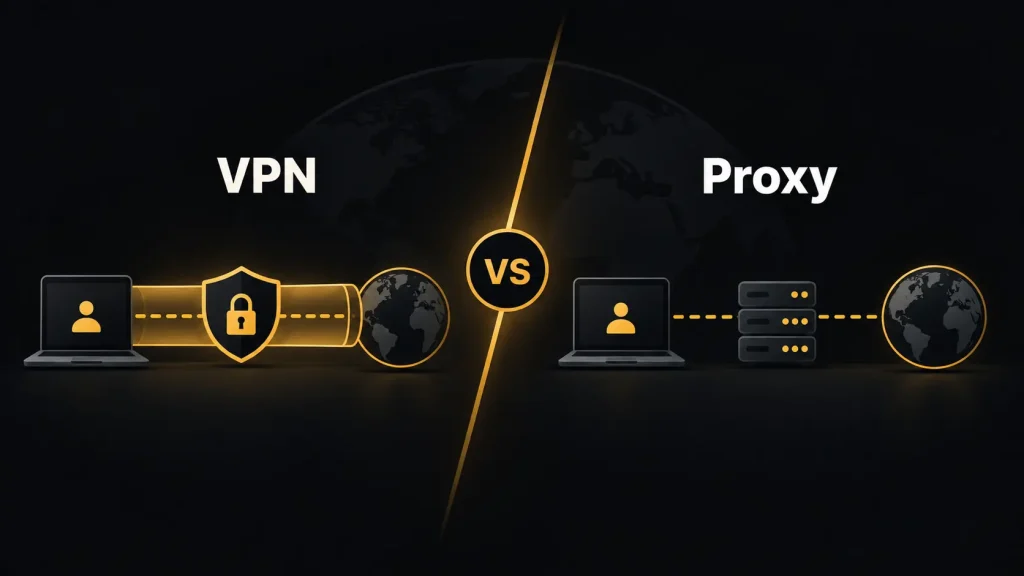
You want to change your IP address, access a site from another region or add some privacy to your browsing. Both a VPN and a proxy can route your traffic through another server, so they may look similar at first. The important difference in the VPN vs proxy comparison is how much traffic they handle and what protection they provide. A proxy can be useful for simple browser tasks, while a VPN is usually the stronger option when privacy and encryption matter.
How a VPN Works
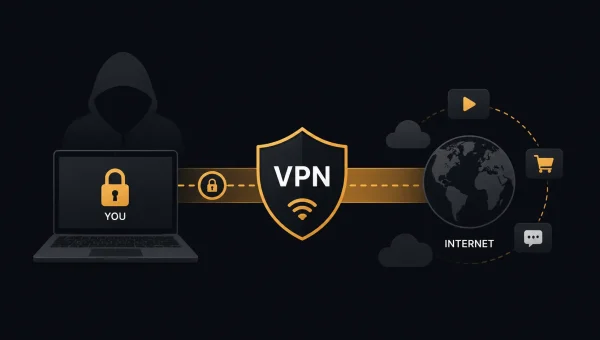
A VPN creates an encrypted connection between your device and a VPN server. Your internet traffic travels through this connection before reaching websites, apps or other online services.
The websites you visit normally see the VPN server’s IP address rather than your regular public IP. Encryption also prevents someone on the same local network from simply reading the traffic traveling through the VPN tunnel.
Most consumer VPN apps can protect traffic from multiple applications at once. If you open a browser, messaging app and another internet connected application, their traffic can generally use the same VPN connection.
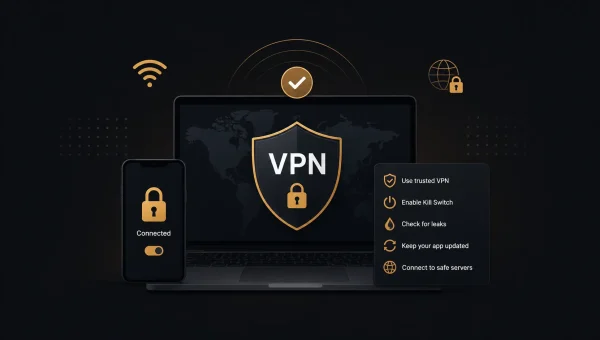
VPNs also commonly include privacy and connection features such as a kill switch, DNS leak protection and split tunneling. The exact feature set depends on the provider and device.
How a Proxy Works
A proxy also acts as an intermediary between you and an online destination. Instead of connecting directly to a website, your request goes through the proxy server first. The destination then sees the proxy’s IP address.
The main difference is scope. Many proxies work only with traffic from a specific application or browser configured to use them. Other applications on your device may continue connecting directly to the internet.
Encryption is another important distinction. A proxy does not automatically create an encrypted tunnel for all traffic between your device and the proxy server. Some proxy technologies can use encrypted connections, but you should not assume that every proxy provides the same privacy protection as a VPN.
This makes proxies useful for specific tasks but less suitable as a general privacy tool.
VPN vs Proxy for Privacy and Security
If your main concern is protecting your connection on public Wi-Fi, a VPN is usually the more appropriate choice. The encrypted tunnel covers supported device traffic rather than simply replacing the visible IP address for one application.
A proxy may hide your original IP from the website you visit, but that alone does not make your connection private. The proxy operator may also be able to observe information passing through its servers, depending on the technology and traffic involved.
Trust matters with both services. Routing traffic through another server means placing some level of trust in whoever operates that server. Look for clear privacy policies and avoid unknown free services that provide little information about how they handle user data.
Which Is Better for Streaming and Everyday Browsing?
For quickly accessing a website through another IP address, a proxy can be convenient. It may require less configuration if you only need it inside one browser.
A VPN is more practical when several applications need the same location or when you want encryption alongside the IP change. This can matter for streaming apps because their traffic may run outside your browser.
Neither option guarantees access to every geo-restricted service. Websites and streaming platforms can detect and block IP addresses associated with VPNs or proxies. Availability can therefore change over time.
Speed also depends on server location, congestion and the quality of the service. A proxy is not automatically faster simply because it provides fewer privacy features.
Should You Use a VPN or Proxy?
The choice becomes easier once you know what you need. Use a proxy for a limited task where changing the visible IP address is the main goal and device wide encryption is unnecessary.
Choose a VPN if you want to encrypt your connection, protect traffic from multiple apps or use public Wi-Fi more privately. A VPN is also generally more convenient when you regularly switch between browsing, streaming and other online activities.
A proxy still has legitimate uses, but it should not be treated as a direct replacement for an encrypted VPN connection.